English
  日本語
日本語  Italiano

New year's day in Japan
One of the main features of Shinmeizan is its attention to the rich cultural heritage of Japan.
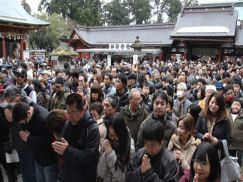
'Shogatsu' or 'Ganjitsu' are key words of Japanese cultural identity. The beginning of a new year, the first day of the year, marked by special traditional rites and customs both within the family and in society at large, constitute in fact, without any doubt, the most important feast in the Japanese calendar. For a brief moment the frantic pace of work of this Country halts and gives away to rites, symbols, and to religious experience. This one takes particularly the form of a visit to a temple, with which the large majority of the Japanese (about two thirds of the total population) begin the new year. It is a brief moment of prayer with joined hands, the uttering or whispering of a desire, a need, a hope... entrusted to some divinity, in the vague awareness that human beings, no matter how skillful or powerful, are unable, by themselves, to reach their goal, to ensure their own happiness or that of their dear ones...
Another fundamental element of the new year's tradition is the family gathering. Crowded trains, ships and airplanes take millions of people working or studying far away from home, back to their family for these sacred days. And then visits to friends, relatives, neighbors... or to someone to whom gratitude is due.
Also Shinmezan lives these days taking part in these traditions in various ways, going from the typical foods of these days, to the ornaments at the entrance and at the doors of the main building or 'hondo', such as the 'kadomatsu', the 'shimenawa' or the 'kagamimochi', to welcoming people coming for the new year visit with an individual greeting and blessing ceremony at the 'hondo', where people come for their "new year visit to a temple", and, then, a cup of tea or of 'zenzai' in the dining hall, where long conversations take place, and all friendships are renewed, or new ones are born...
The beginning of the year is really for Japan a great religious feast, even though mostly bound to folk lore; a common feast for people of all religions and event people with no religion, where all feel united by a vague but yet powerful "religious bond", an occasion to be reminded of the religious dimension of Japanese ancestral culture.