 English
  日本語
日本語  Italiano

January 2018: new year celebration
AND MESSAGE TO FOLLOWERS OF SHINTO
SHINMEIZAN: January 2018
Almost two thirds of the Japanese begin the year with a visit to a Shrine, usually a Shinto Shrine. Characteristic decorations for this occasion are the kadomatsu placed at the gates of temples, public places or also private houses; the shimenawa hung over the gates of Shinto Temples, or also of private houses, or even on the front of cars! as well as the kagamimochi placed over a small altar-like support or simply on a fitting place in the house.
A picture of them can help more than any description to convey the idea of how these decorations look like. Here are the pictures of the new year’s ornaments we used at Shinmeizan. Of course these decorations, linked somehow to the Shinto tradition, are not usually seen in Christian Churches, but Shinmeizan, as a Center for Interreligious Dialogue, has adopted them from the very beginning to welcome people, Christians and non-Christians alike, who come for the hatsumode or New Year’s visit.
Also this year, at Shinmeizan, the Eucharist was held very early in the morning, to allow the participants to leave the hondo and go out into the open for the prayer outside, turned towards the East, while waiting for, and celebrating the, appearance of the first dawn of the year, a ritual practiced by many Japanese, all over the Country.
This year the clouds, with a red lining reflecting the rising sun, were actually hiding it from our view, but we went on just the same, as we use to do every year, with the proclamation of John’s Gospel, ch. 1, vv. 1-5.18, followed by the singing of Psalm 19, vv. 1-7, and of the Canticle of Zacharias. After this simple but moving New Year’s ritual, the small group of friends who had gathered for the occasion, enjoyed with us a hot bowl of zenzai and a cup of cha. Which we offered also to the people from our village, from neighboring villages, and to other friends who came later on during the first three days of the year for hatsumode.
An activity connected with the beginning of the year, that Shinmeizan has been carrying out since a few years ago, is the sending on of the special New Year’s message of the Pontifical Council for Interreligious Dialogue, addressed to the followers of Shinto, to our Shinto friends and partners in dialogue. We send this message also to all the Pastors of the Catholic Churches of our Diocese (Fukuoka) suggesting they take this opportunity to visit a neighboring Shinto temple and offer their New Year’s greetings.
We post this message also on this Home Page for those who may be interested, wishing to all our friends a year of peace, pledging to work for peace especially through the practice of dialogue and friendship among the religions.
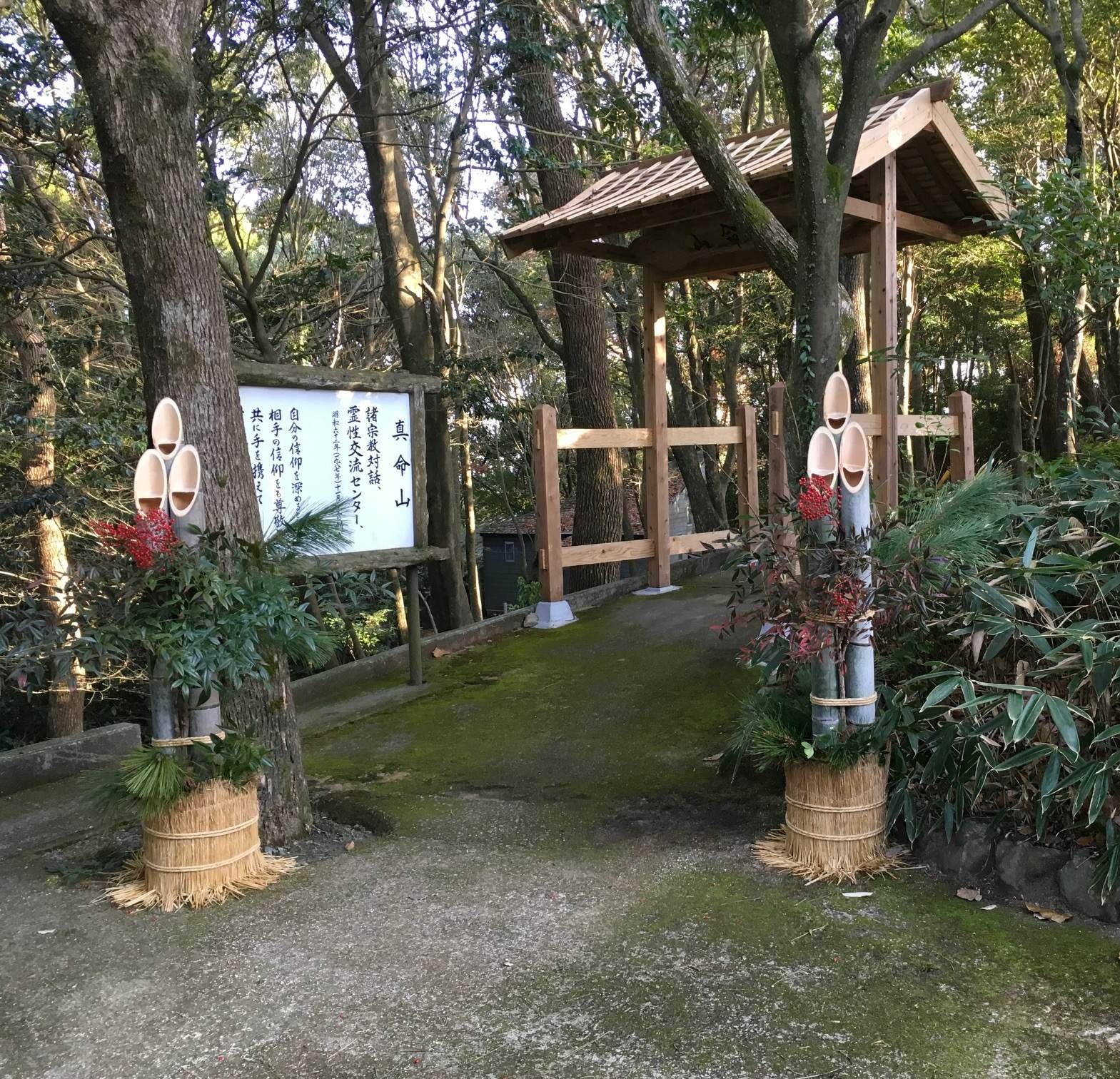
KADOMATSU - 門松
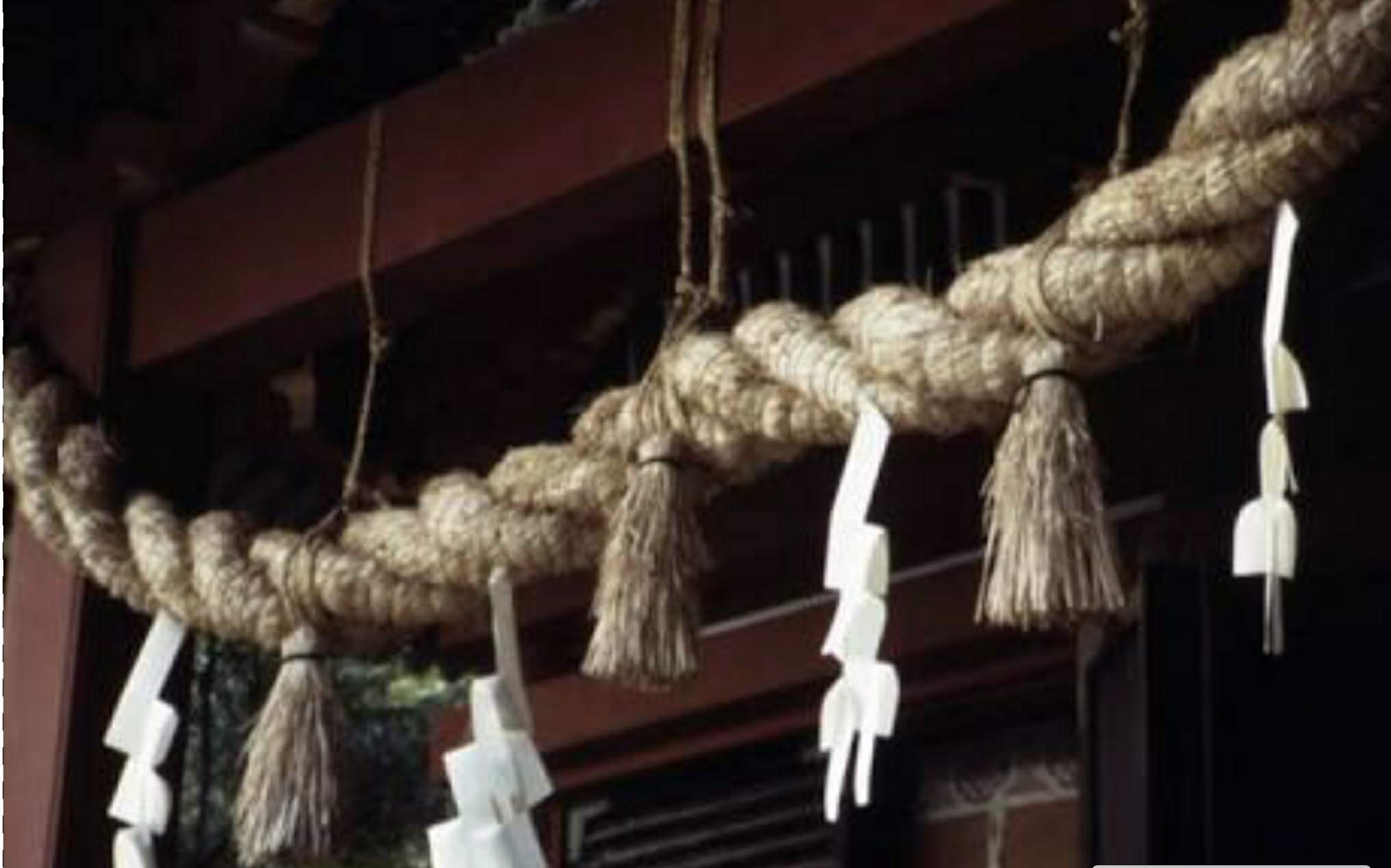
SHIMENAWA - 注連縄

KAGAMIMOCHI -鏡餅
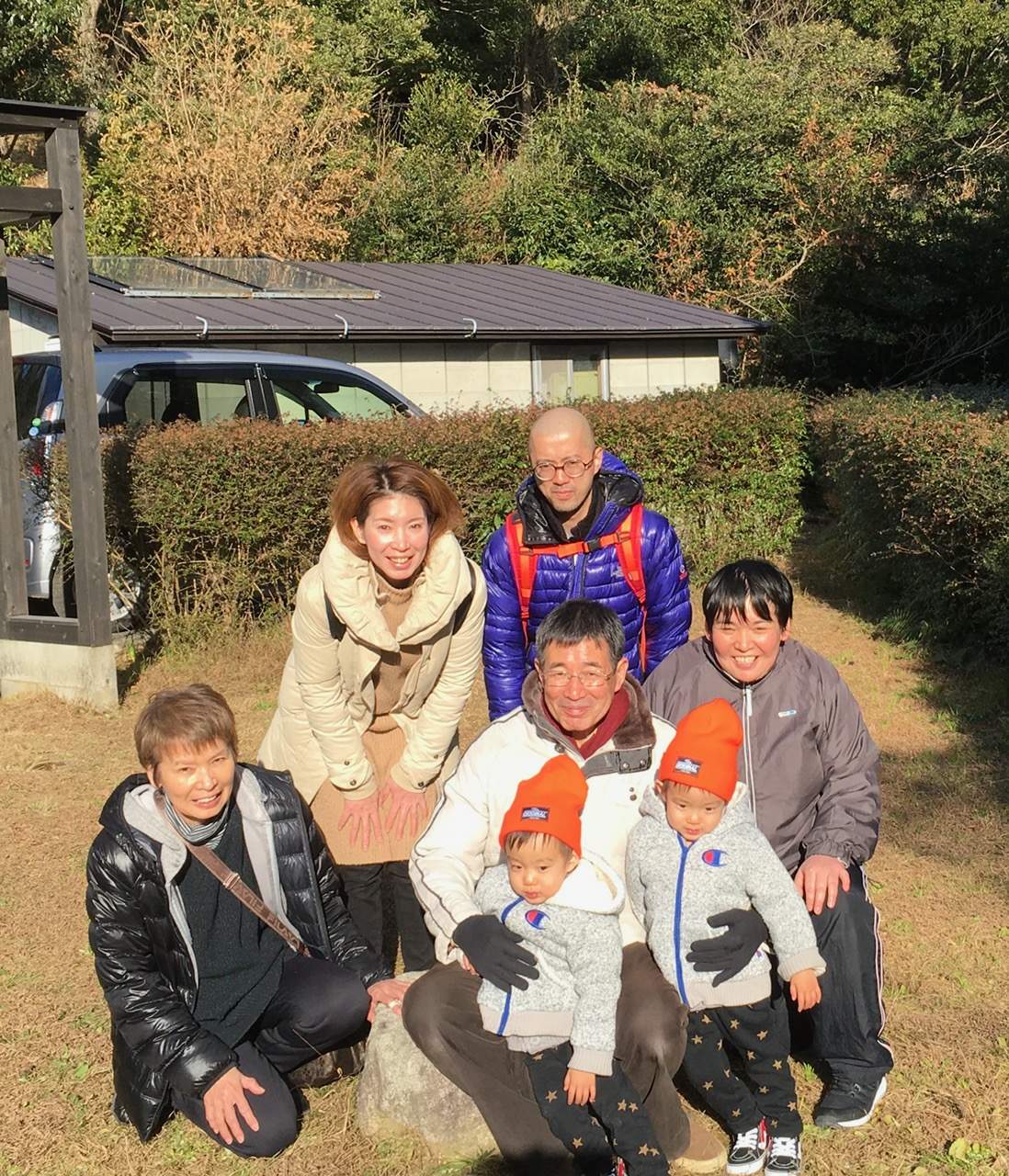
A familiy visiting Shinmeizan at the beginning of the year
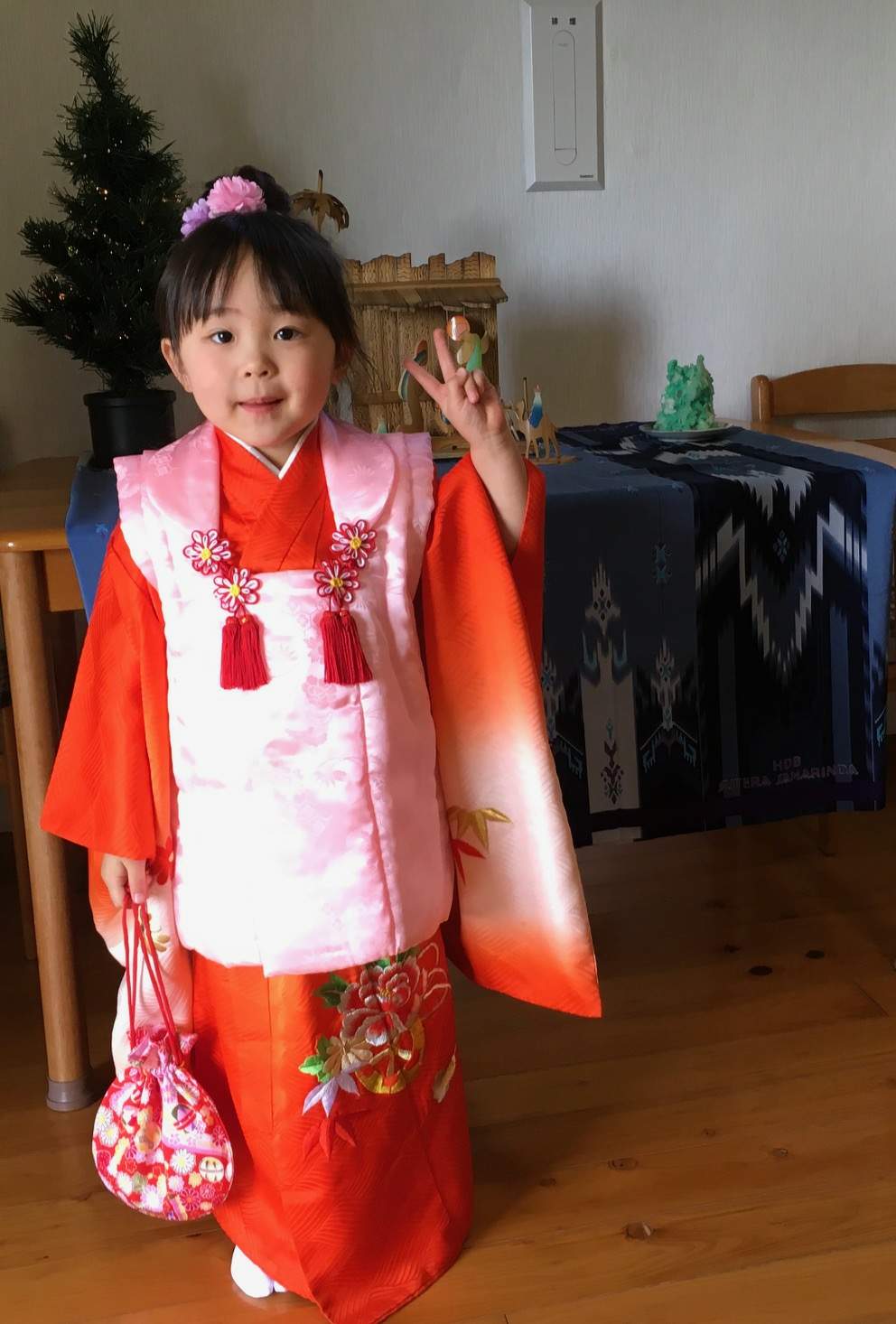
Child in traditional dress visiting Shinmeizan
PONTIFICAL COUNCIL FOR INTERRELIGIOUS DIALOGUE
MESSAGE TO FOLLOWERS OF SHINTO : year 2018
"Christian and Shinto Followers Together: Facing the Challenge of Generation Gap"
Vatican City
Dear Shinto Friends, 1. The Pontifical Council for Interreligious Dialogue sends you warm greetings and best wishes for the beginning of a New Year, a celebration for all Japanese and in particular for the followers of Shinto. On this joyful occasion, the customary visit to a Shinto Shrine will bring millions of visitors, including many young people.
- This year in our greetings, we would like to reflect together on the growing differences between generations which today present notable challenges. The Catholic Church is organising a world-wide consultation entitled “Young People, the Faith and Vocational Discernment” in October 2018. The Preparatory Document for this meeting notes that “Today’s generation of young people live in a world which is different from that of their parents and educators. Economic and social changes have affected the gamut of obligations and opportunities. The aspirations of young people, their needs, feelings and manner of relating to others have changed as well” (n. 2). It further underlines that “In this context, the old approaches no longer work and the experience passed on by previous generations quickly becomes obsolete” (n. 3).
- Clearly the generation gap is deep the world over, but especially in the more developed countries such as Japan. This is marked by older and younger people who have difficulty understanding each other because of their different experiences, opinions, habits, and behaviour. The seeming division among the different generations also contributes to a common problem that increasingly afflicts every generation, namely loneliness. Parents and children can hardly find time together due to the fast-pace of modern lifestyles. The growing lack of communication and interaction among people weakens bonds between generations which were previously the means of passing on the cultural and religious heritage, as well as the wisdom of elders to future generations.
- Dear friends, we have a common concern and task to bridge this generation gap. By experience, we know that leaving an inheritance of economic prosperity to the next generation will not alone guarantee either happiness or a world of justice and peace. What we have is a real treasure needing to be transmitted to the next generation, that is the spiritual inheritance of our respective religious faiths. The threats to peace that presently trouble our world, which the new generation will be called to face, will not be resolved by military confrontation and hostility, but only by the wisdom and the power of dialogue, patience and magnanimity. This is the spiritual heritage that we ought to pass on to the next generations.
- Pope Francis encourages youth to cultivate close relationships with their grandparents and with those who are older. He encourages them to listen to the elderly who have the wisdom of life. He also points out that the grandparents themselves need to listen to the young in order to understand their aspirations and hopes (cf. radiovaticana.va/news/2016/12/19). Thus, each generation can foster and support the other through close interpersonal communication.
- In the end we are human beings who are in essence relational and in need of meaningful contact with each other. Thus, the best antidotes to an ever-widening generation gap are love and understanding expressed in face-to-face interactions or even via digital media which can be an opportunity for meaningful relationship when done in such a context.
- May the festivities of the New Year be a happy occasion where young and old come together to rediscover their religious and traditional cultural values, bridging any distance between generations. May the joint efforts of Christians and the followers of Shinto world-wide truly help bring old and young to recognize the gift of one generation to the other, strengthening society. With this common wish, we offer our cordial greetings once again to you, your families and to your communities.
Happy Oshogatsu to all of you!
Cardinal Jean-Louis Tauran President
Bishop Miguel Ángel Ayuso Guixot, MCCJ Secretary