English
  日本語
日本語  Italiano

Some News: April-June 2015
During these last few months our small community has split between Japan and Europe!
Sr. Maria De Giorgi, while holding her annual courses at the Pontifical Gregorian University in Rome, has also been requested of other activities in the field of interreligious dialogue. Among them:
- An interview at the Pontifical Council for Interreligious Dialogue in Rome, on the 50th anniversary of the declaration "Nostra Aetate" of the 2nd Vatican Council, for a documentary film to be released at an event planned for this occasion at the Gregorian University in Rome.
- A Conference at the Pontifical University of Saint Thomas in Rome on the history of the Christian missions in Japan.
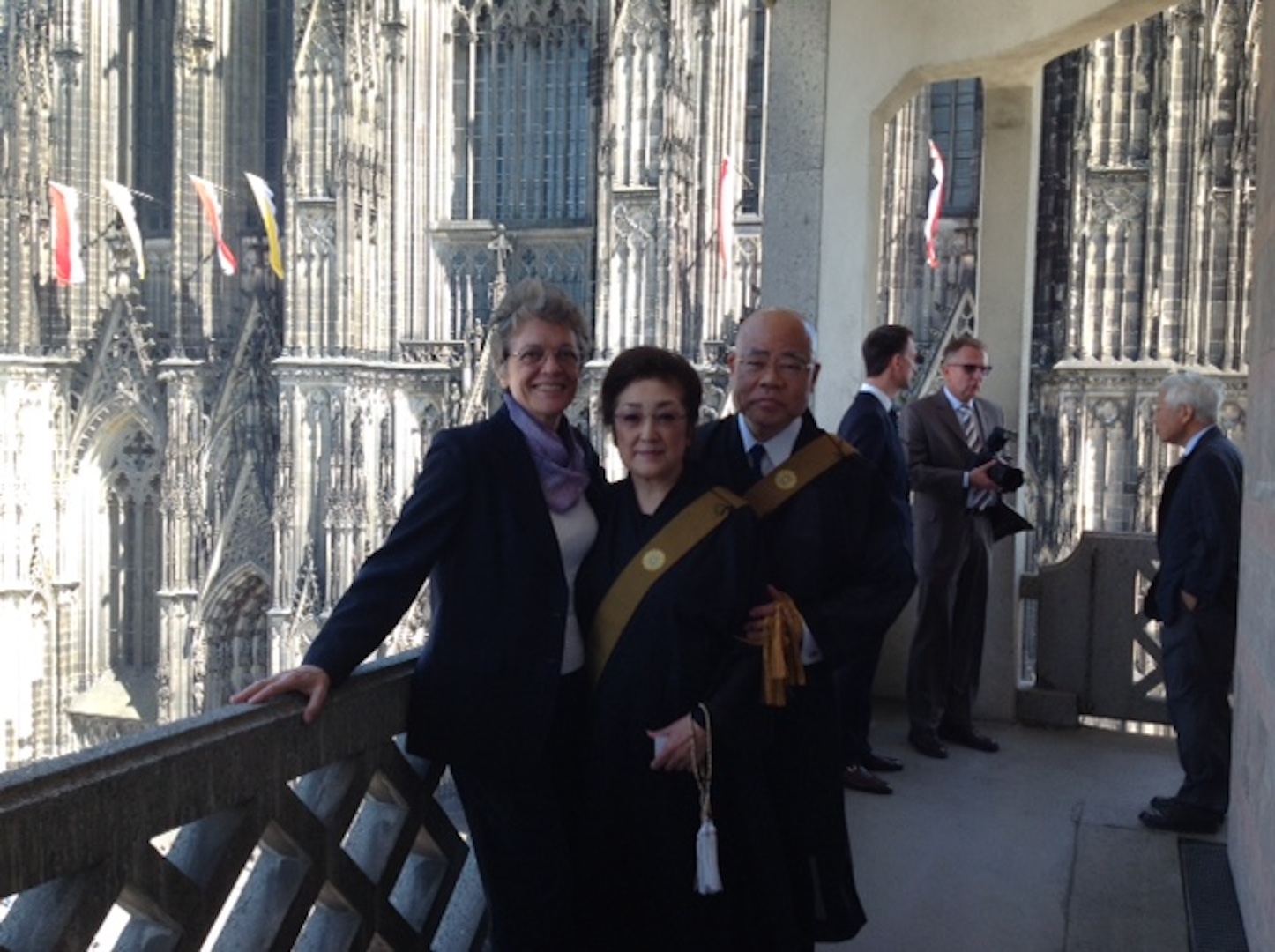
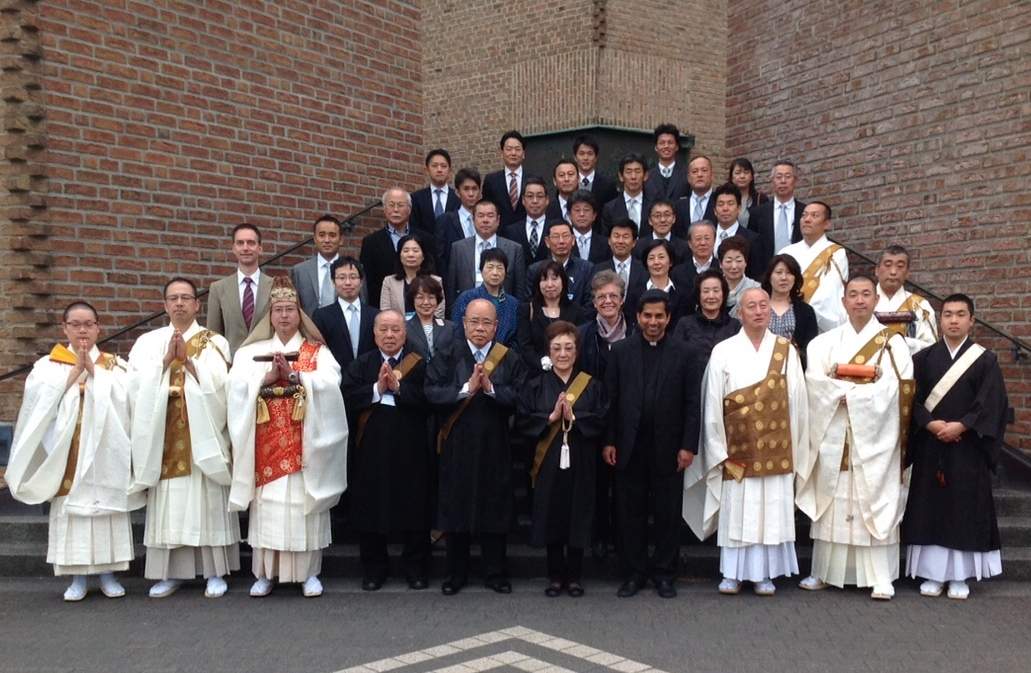
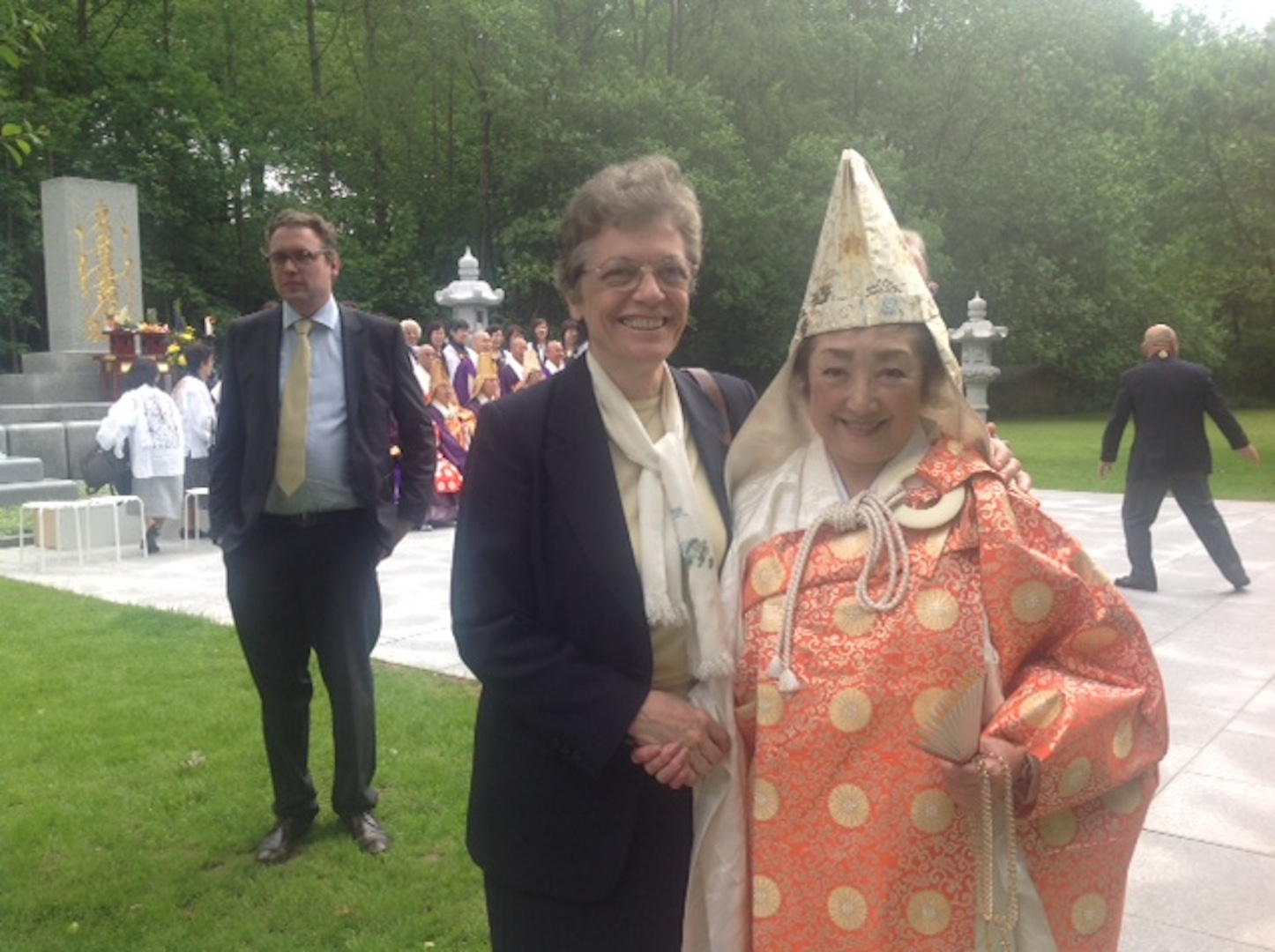
- Participation, on June 5-10, in the celebrations for the 10th anniversary of the Buddhist temple Saion in Wipperfürth (Germany), a branch of the Myokenkaku temple of Osaka (Nichiren School), with which Shinmeizan is connected by bonds of dialogue and friendship.
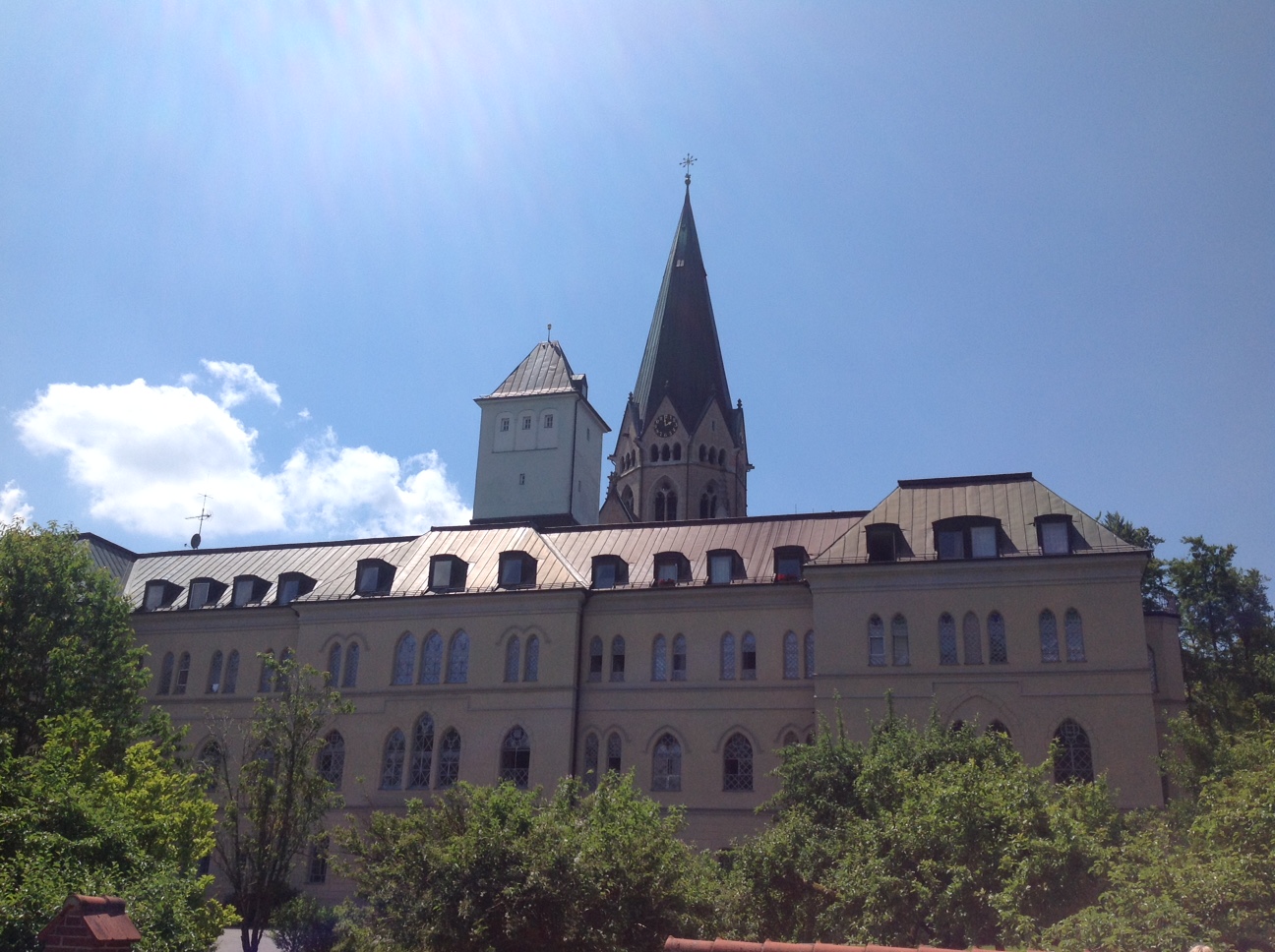
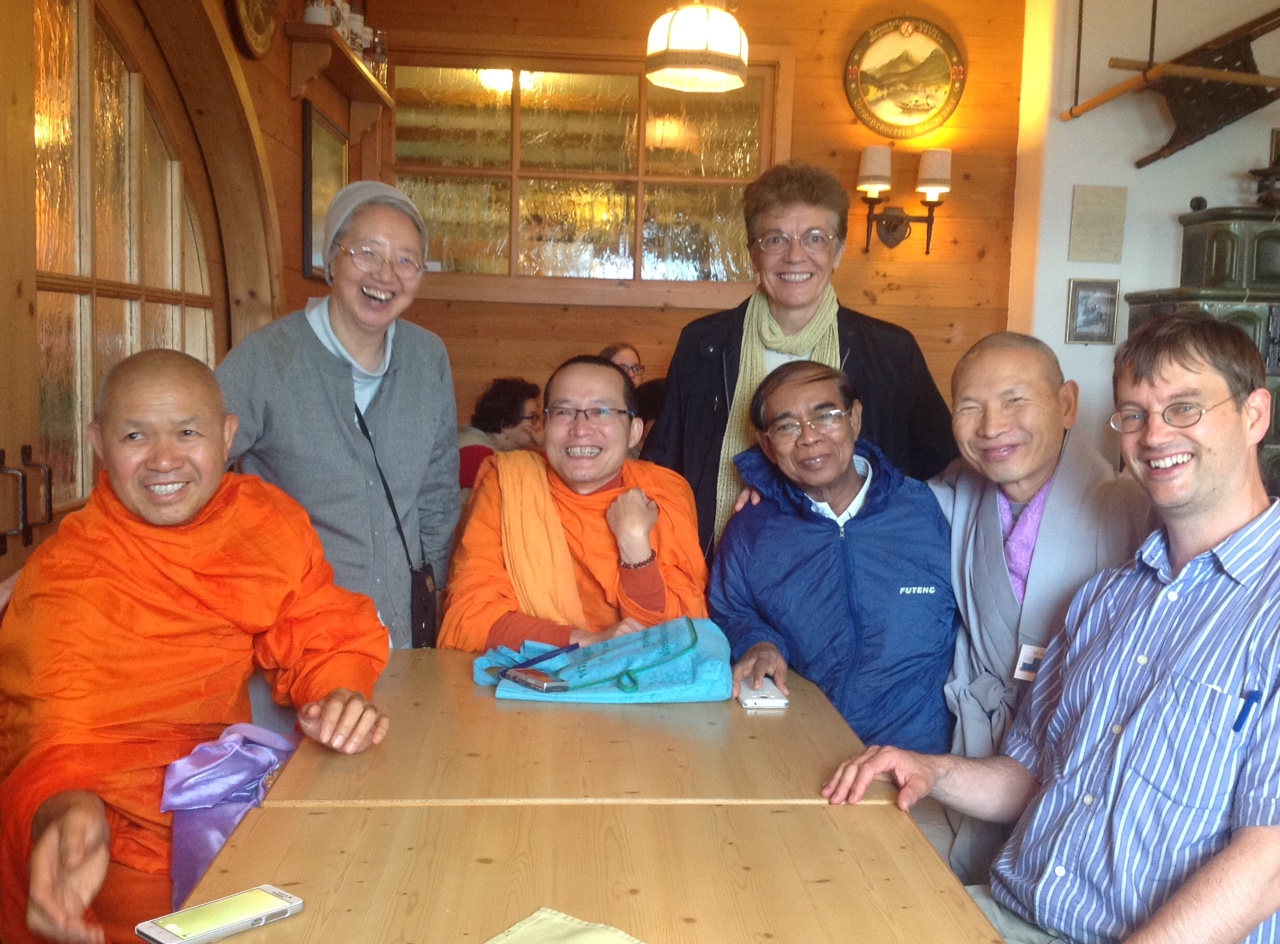
- Participation in the international symposium of the European branch of the Association for Buddhist-Christian Studies, on June 25-29, at the Abbey of St. Ottilien in Germany, with a conference on ongoing dialogue between Christians and Buddhists in Japan.
Shinmeizan, like every year, on the occasion of Hanamatsuri (Vesakh) has sent a personal letter to all Buddhist partners in dialogue, with a copy of the official message from the Pontifical Council for Interreligious Dialogue. Moreover, copies of this message have been forwarded to all Catholic Parishes of the Diocese of Fukuoka, asking Pastors to take this opportunity to contact neighbouring Buddhist Temples and offer them congratulations for the occasion. Fr. Franco
- on May 17th, has taken part in the annual solemn celebration of “Symphony of Prayers for Peace” (SOPP), an interreligious event organized by the Byakko Shinko Kai at the foot of Mount Fuji. This year, this international and interreligious event centered around the “Fuji declaration”, an earnest call for a deeper awareness and a more determined commitment for peace on the part of all religionists and concerned people.
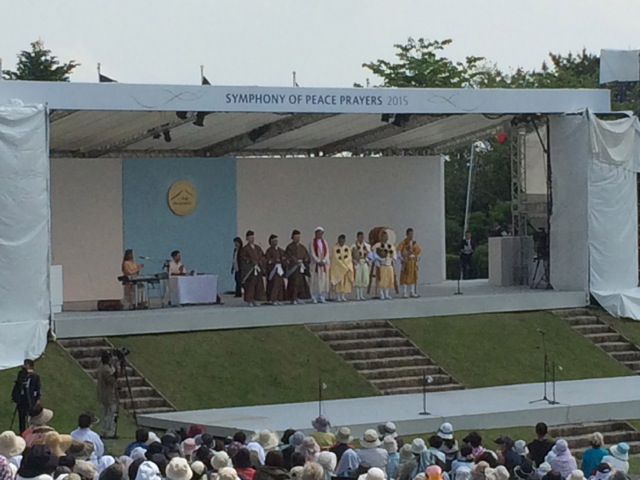

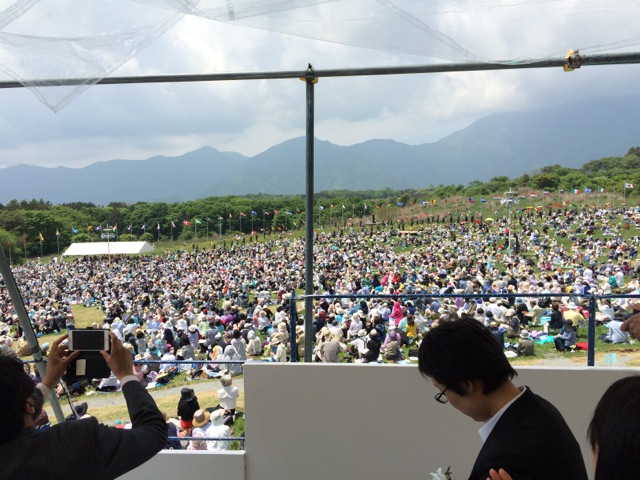
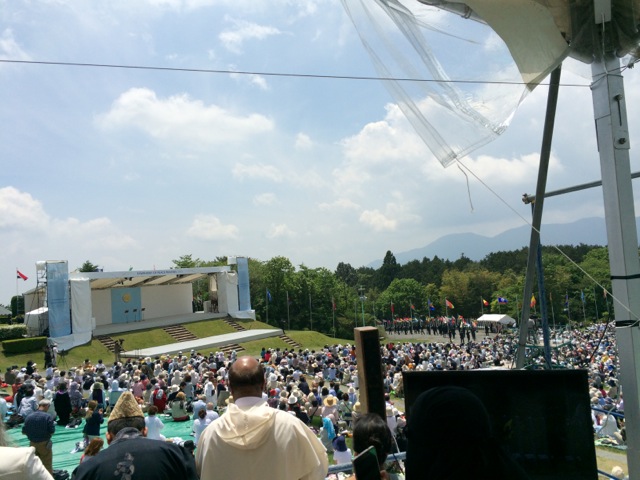
- On May 23rd participated in the annual celebration for the anniversary of Shinran’s birthday, at the Sainen Temple (Pure Land Buddhism, Nishi Honganji) in Imari (Saga Pref.).
- During the month of June participated in the memorial celebration of the birth (100th anniversary) and unjust execution (40th anniversary) of Nishi Takeo, held at the Seimeizan-Schweitzer Temple of Tamana, and collaborated with Ven. Furukawa Ryuji for the parallel celebrations held in Fukuoka and Tokyo.
- On June 29th, visited the Gyokusho Temple (Soto Zen) in Kikuchi, to prepare for the interreligious encounter to take place there on Nov. 3rd , as part of the activity of the Kumamoto group for interreligious dialogue.
Fr. Sonoda, who is commuting between Shinmeizan and Beppu (Oita Pref.) where he is in charge of a Parish, on May 11th took part in the bimonthly meeting of the Buddhist-Christian study group of Fukuoka.
Besides these activities in the field of interreligious dialogue, Shinmeizan has continued its service as a “House of Prayer” providing hospitality for guests, welcoming visitors, and holding the monthly retreats always well attended, notwithstanding the heavy rains of this… truly “rainy” season!
Special feature: work and prayer in contact with nature
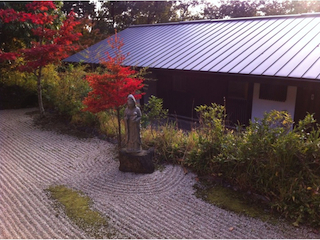
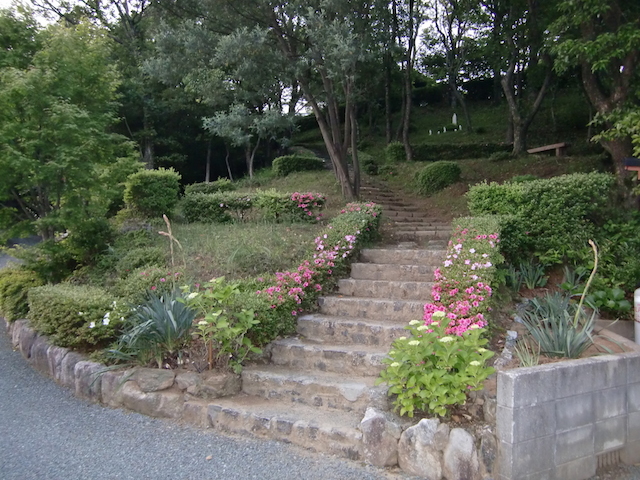
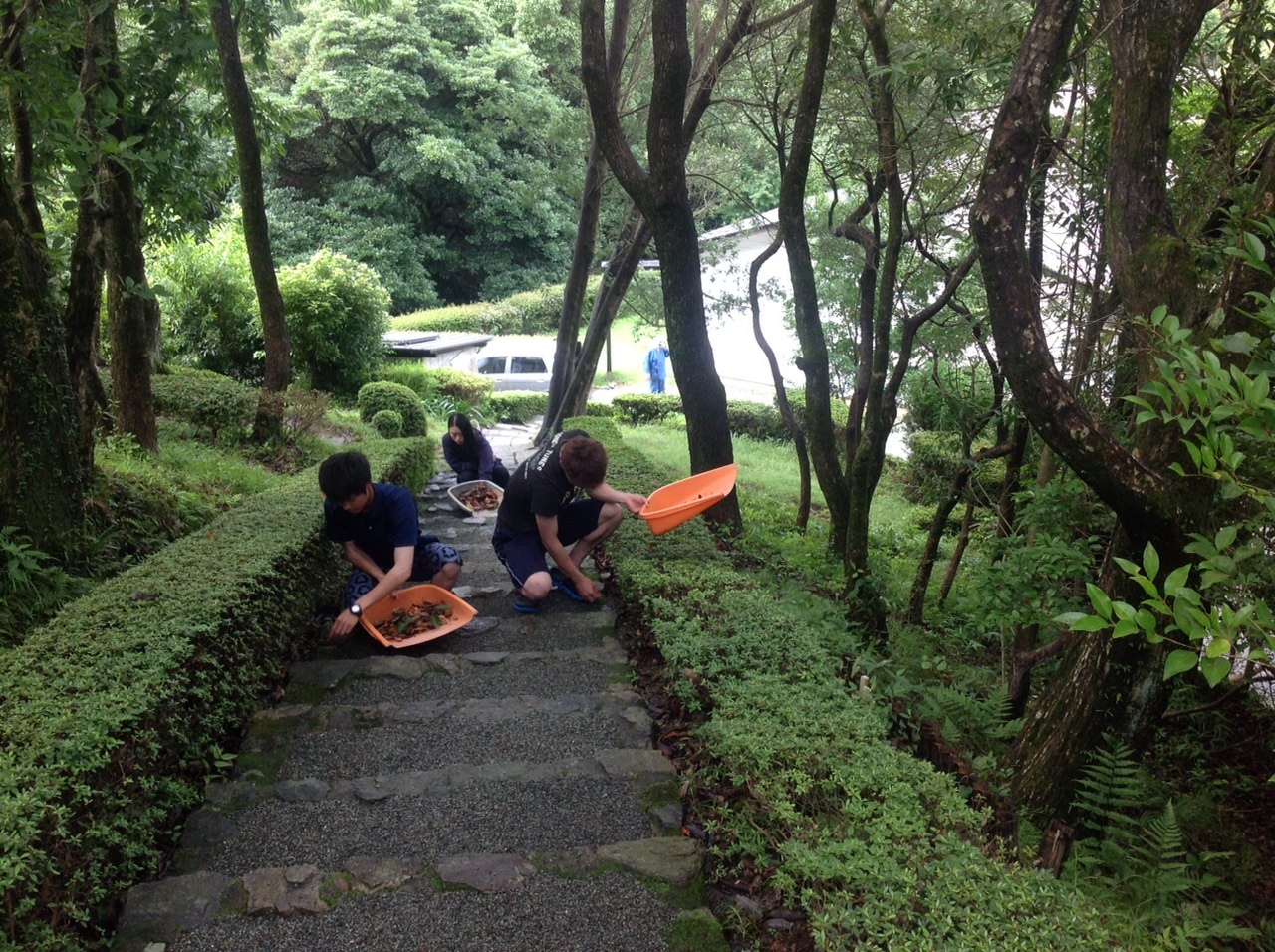
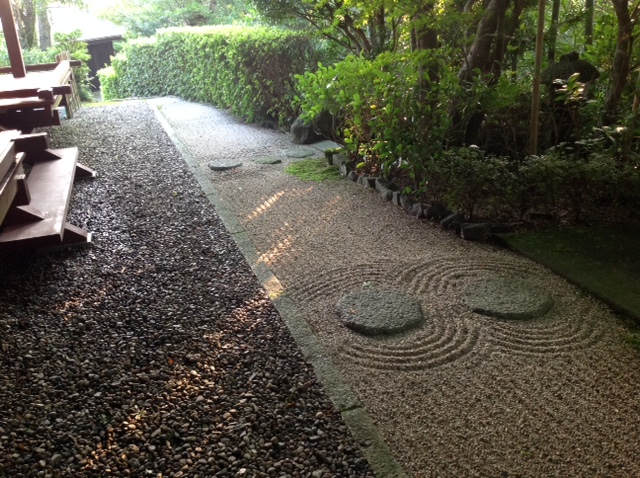
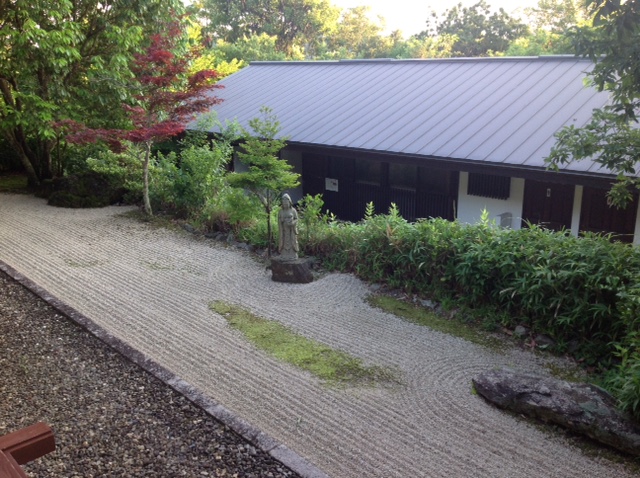
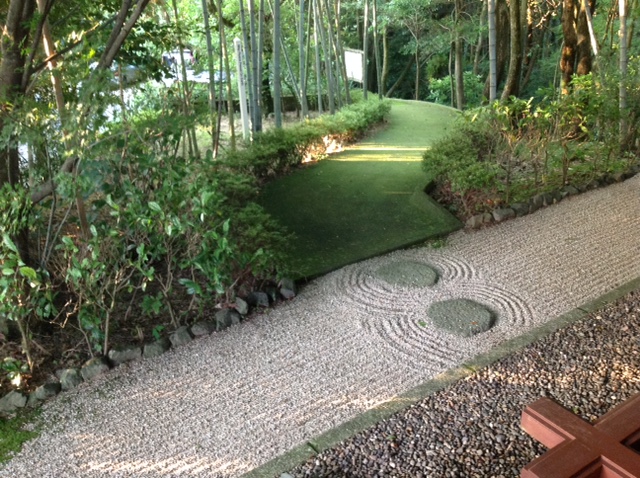
Shinmeizan is situated on a hill surrounded by thick woods, in the midst of nature. These surroundings constitute an important element of its identity and provide a suitable atmosphere for its spirituality, which finds inspiration in Japanese culture and in Shinto tradition, where nature has a strong religious connotation. All this is certainly enriching and beautiful… but also very demanding! It requires in fact constant care and a lot of work. We have to prune the shrubs lining the grounds and the stairway leading up to the top of the hill where the Hondo is situated…. To pick up the leaves that fall abundantly, and always more, as the trees grow taller and their branches stretch further every year! And to cut the grass, not only on the premises but for one kilometer of the road leading up to Shinmeizan, as part of our cooperation with the local community to keep the roads of the village in order! And the regular practice of “kusatori”. i.e. picking weeds that in Japan, during the hot and humid season of summer, grow everywhere… and fast. At Shinmeizan we give great importance to the practice of “samu”. Actually, samu is a common practice of Buddhist, especially Zen, Temples.
Samu
At Shinmeizan we give it 30 minutes, right after breakfast, always in silence. Rather that a kind of “work”, samu is a kind of prayer. Samu consists very simply in cleaning up a little space entrusted to you, usually outside. But here “to clean” means to make that little space what it is supposed to be, i.e. to make it beautiful, but in the sense of “natural”… This action has a double effect, one outside and one inside of the person who performs it. While one tries to make things what they are supposed to be, “beautiful”, outside, one feels the need to make one’s own heart, inside, also “what it is supposed to be”, “beautiful”. For Christians, that means to work with God to make this world “what it is supposed to be”, “beautiful”. It means to be co-workers with God to make this world, nature yes, but also society, more “beautiful”, more “human”, more like what God wants it to be: something like the “garden” where God first placed human beings (Gen. 2) to toil and to guard it: a symbol of the “Kingdom of God”, a symbol of that “garden” that will grow at the center of the new Jerusalem, the dwelling place prepared by God for human beings, according to the vision of the Book of Revelation (Ap. 22,2).